Ieri e oggi
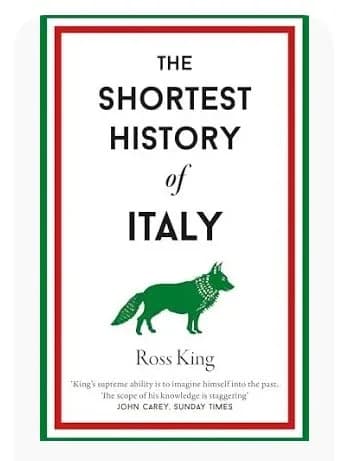
3,000 years of Italian drama in 200 pages
Can understanding Italy's chaotic past explain its modern soul?
Wrapping your head around Italian history can feel like... a lot. Between Roman emperors, Renaissance rivalries, papal intrigues, and 68 post-WWII governments, where do you even start?
Enter The Shortest History of Italy.
We love this book as both reference and entertainment. Instead of overwhelming you with dates, it delivers a sharp, beautifully paced tour of how a fractured collection of city-states, divided by geography, dialects, and fierce local rivalries, eventually became a unified nation state in 1861. In doing so, it manages to explain why Italians often feel a stronger allegiance to their native village or region (referred to as campanilismo, which basically means "our belltower is the best") than to the central government in Rome.
So if you want to understand why modern Italy is what it is, it’s required reading. You’ll stop seeing Italy as just a country and start seeing it as a brilliant, chaotic mosaic held together by art, food, and sheer willpower.
And a quick tip: Read the chapter on the Risorgimento (Italian unification) before traveling. The next time you walk into an Italian town, you’ll be able to quickly get your bearings, remembering why every single village has both a Piazza Garibaldi and a Via Cavour!