A tavola!
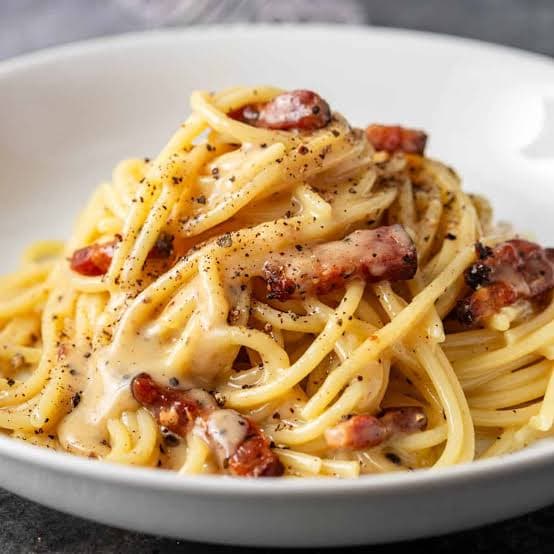
The myth of the ancient Carbonara
Did you know that Rome’s most sacred pasta dish is actually a brilliant postwar invention?
What's one of the most famous Italian dishes, its "authentic" recipe defended vigorously by Italians around the world, and that is traced to... the United States?
If you ever ask an Italian about how to make carbonara, they'll be categorical: guanciale (pork cheek), pecorino (sheep's cheese), eggs. Period. No cream, no garlic, nothing else.
And we have to say, they're right! But in the interest of historical accuracy, we also have to say that unlike other traditional recipes that can be traced back to medieval roots, carbonara isn't found in any Italian cookbooks before World War II.
Its origins seem to be in the 1940s, when American soldiers stationed in Italy were craving a taste of home: bacon and eggs, specifically. Some resourceful local chefs combined military rations with traditional Roman ingredients like guanciale and pecorino. A legend was born.
We love this story because it turns culinary snobbery on its head, showing that what we think of as "pure tradition" can just as often be the brilliant result of a historical get-together. Pasta carbonara isn't a centuries-old monument; it's a delicious post-war collaboration that shows how Italian cuisine can adapt to the world around it.
Do you want to find out which other Italian dishes are actually not really Italian, and also get Angela's recipe?